
Barefoot Μασάζ στην Αθήνα
Για όσους αναζητούν μια διαφορετική εμπειρία μάλαξης με πιο σταθερή και βαθιά πίεση, το Barefoot μασάζ αποτελεί μια ιδιαίτερη επιλογή. Η τεχνική βασίζεται στη χρήση των πελμάτων από τον θεραπευτή, ώστε η πίεση να εφαρμόζεται σε μεγαλύτερες επιφάνειες του σώματος με πιο ομαλό και ελεγχόμενο τρόπο.
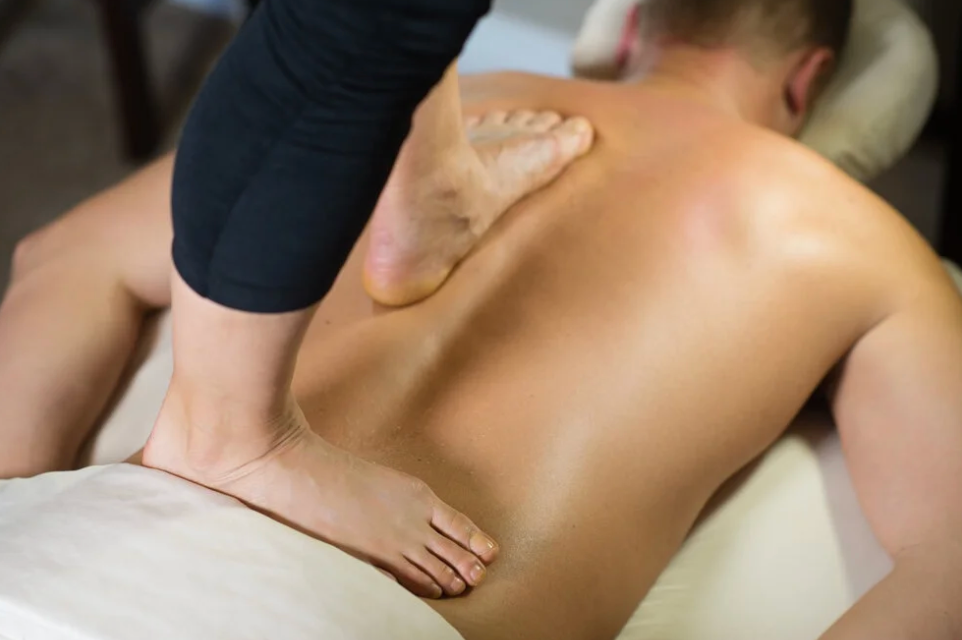
Μια από τις πιο γνωστές μορφές της συγκεκριμένης προσέγγισης είναι το Ashiatsu μασάζ, στο οποίο ο θεραπευτής χρησιμοποιεί τα πόδια του για να εφαρμόσει αργές και σταθερές κινήσεις, προσαρμόζοντας κάθε φορά την ένταση στο επίπεδο άνεσης του πελάτη. Η μεγαλύτερη επιφάνεια επαφής μπορεί να δημιουργήσει μια διαφορετική αίσθηση σε σχέση με ένα κλασικό μασάζ με τα χέρια.
Στο DM Massage, η συνεδρία μπορεί να πραγματοποιηθεί στον κατάλληλα διαμορφωμένο χώρο μας ή, όπου οι συνθήκες το επιτρέπουν, ως μασάζ κατ’ οίκον. Στόχος είναι μια ελεγχόμενη και προσαρμοσμένη εμπειρία, με έμφαση στην άνεση, τη βαθύτερη πίεση και τη συνολική αίσθηση αποφόρτισης.
Τι είναι το Barefoot Μασάζ;
Το Barefoot μασάζ είναι μια μορφή μάλαξης κατά την οποία ο θεραπευτής χρησιμοποιεί κυρίως τα πέλματά του για να εφαρμόσει πίεση στο σώμα. Η τεχνική αυτή επιτρέπει την επαφή με μεγαλύτερη επιφάνεια σε σχέση με τα χέρια, δημιουργώντας μια αίσθηση σταθερής και ομοιόμορφης πίεσης.
Η εφαρμογή γίνεται με αργές και ελεγχόμενες κινήσεις, ενώ η ένταση προσαρμόζεται ανάλογα με το επίπεδο άνεσης και τις προσωπικές προτιμήσεις του κάθε ατόμου. Ο στόχος δεν είναι η υπερβολική πίεση, αλλά μια βαθύτερη και πιο σταθερή προσέγγιση που μπορεί να εστιάσει σε μεγαλύτερες μυϊκές περιοχές.
Μια από τις πιο γνωστές τεχνικές που ανήκουν σε αυτή την κατηγορία είναι το Ashiatsu μασάζ. Σε αυτήν, ο θεραπευτής χρησιμοποιεί τα πόδια του με ελεγχόμενο τρόπο, συχνά με τη βοήθεια κατάλληλης στήριξης για καλύτερη ισορροπία και ακρίβεια στις κινήσεις.
Σε σύγκριση με ένα κλασικό μασάζ, το Barefoot μασάζ προσφέρει μια διαφορετική αίσθηση πίεσης και επαφής, κάτι που το κάνει κατάλληλο για όσους προτιμούν πιο σταθερές, αργές και βαθιές τεχνικές μάλαξης.
Ashiatsu Μασάζ: Η Τεχνική Πίσω από τη Βαθιά Πίεση
Το Ashiatsu μασάζ είναι μια τεχνική που ανήκει στην κατηγορία του Barefoot massage και βασίζεται κυρίως στη χρήση των πελμάτων για την εφαρμογή σταθερής και ελεγχόμενης πίεσης. Ο θεραπευτής χρησιμοποιεί το βάρος του σώματός του με προσεκτικό τρόπο, ώστε η ένταση να κατανέμεται πιο ομοιόμορφα σε μεγαλύτερες μυϊκές περιοχές.
Η τεχνική χαρακτηρίζεται από αργές και συνεχόμενες κινήσεις, οι οποίες μπορούν να εφαρμοστούν κυρίως σε περιοχές όπως η πλάτη, οι γλουτοί και τα πόδια. Η μεγαλύτερη επιφάνεια επαφής του πέλματος δημιουργεί διαφορετική αίσθηση σε σχέση με την πίεση που εφαρμόζεται με τα χέρια ή τους αγκώνες.
Κατά τη διάρκεια της συνεδρίας, ο θεραπευτής μπορεί να χρησιμοποιεί ειδικά σημεία στήριξης για καλύτερη ισορροπία και μεγαλύτερο έλεγχο των κινήσεων. Αυτό επιτρέπει την προσαρμογή της πίεσης ανάλογα με τις προτιμήσεις και το επίπεδο άνεσης του κάθε ατόμου.
Το Ashiatsu μασάζ μπορεί να αποτελέσει μια ιδιαίτερη επιλογή για όσους προτιμούν βαθύτερη αλλά ταυτόχρονα πιο ομοιόμορφη πίεση και θέλουν να δοκιμάσουν μια διαφορετική προσέγγιση από το κλασικό ή το Deep Tissue μασάζ.
Πώς Διαφέρει από ένα Κλασικό Μασάζ;
Η βασική διαφορά βρίσκεται στον τρόπο με τον οποίο εφαρμόζεται η πίεση. Σε ένα κλασικό μασάζ, ο θεραπευτής χρησιμοποιεί κυρίως τα χέρια, τις παλάμες και τα δάχτυλα. Αντίθετα, στο Barefoot μασάζ η πίεση εφαρμόζεται κυρίως με τα πέλματα, γεγονός που επιτρέπει την επαφή με μεγαλύτερη επιφάνεια του σώματος.
Αυτό δημιουργεί μια διαφορετική αίσθηση, καθώς η πίεση μπορεί να είναι βαθιά αλλά ταυτόχρονα πιο ομοιόμορφα κατανεμημένη. Οι κινήσεις είναι συνήθως αργές και ελεγχόμενες, ενώ η ένταση ρυθμίζεται σταδιακά σύμφωνα με το επίπεδο άνεσης του κάθε ατόμου.
Σε τεχνικές όπως το Ashiatsu μασάζ, ο θεραπευτής αξιοποιεί το βάρος του σώματός του με ελεγχόμενο τρόπο, ώστε να μπορεί να εφαρμόσει σταθερή πίεση σε μεγαλύτερες μυϊκές περιοχές. Αυτό διαφοροποιεί σημαντικά την εμπειρία από πιο τοπικές τεχνικές, όπου η πίεση ασκείται κυρίως με τα χέρια ή τους αγκώνες.
Το Barefoot μασάζ μπορεί επομένως να αποτελεί μια ενδιαφέρουσα επιλογή για όσους προτιμούν πιο βαθιά πίεση και θέλουν να δοκιμάσουν μια διαφορετική μορφή μάλαξης, χωρίς αυτό να σημαίνει ότι η συνεδρία πρέπει να είναι υπερβολικά έντονη ή δυσάρεστη.
Barefoot Μασάζ Κατ’ Οίκον
Για όσους προτιμούν την άνεση του δικού τους χώρου, το Barefoot μασάζ κατ’ οίκον μπορεί να αποτελέσει μια πρακτική επιλογή, εφόσον υπάρχουν οι κατάλληλες συνθήκες για την ασφαλή εφαρμογή της τεχνικής. Επειδή η συνεδρία βασίζεται στη χρήση των πελμάτων και σε ελεγχόμενες μετακινήσεις του θεραπευτή, απαιτείται επαρκής χώρος γύρω από το κρεβάτι μασάζ.
Κατά τη διάρκεια της συνεδρίας, η πίεση προσαρμόζεται σταδιακά ανάλογα με το επίπεδο άνεσης και τις προσωπικές προτιμήσεις του κάθε ατόμου. Η μεγαλύτερη επιφάνεια επαφής του πέλματος επιτρέπει την εφαρμογή πιο ομοιόμορφης πίεσης σε μεγαλύτερες μυϊκές περιοχές, διατηρώντας παράλληλα αργό και ελεγχόμενο ρυθμό.
Η επιλογή για μασάζ κατ’ οίκον προσφέρει το πλεονέκτημα ότι δεν χρειάζεται να μετακινηθείτε πριν ή μετά τη συνεδρία. Μπορείτε να παραμείνετε στο οικείο περιβάλλον του σπιτιού σας και να συνεχίσετε τη χαλάρωσή σας μετά την ολοκλήρωση του μασάζ.
Το DM Massage μπορεί να προσφέρει Barefoot μασάζ στον χώρο σας, όπου οι συνθήκες το επιτρέπουν και ανάλογα με τη διαθεσιμότητα και την περιοχή εξυπηρέτησης. Πριν από το ραντεβού μπορεί να επιβεβαιωθεί ότι ο διαθέσιμος χώρος είναι κατάλληλος για τη σωστή και άνετη εφαρμογή της τεχνικής.
Μια Διαφορετική Εμπειρία στον Χώρο του DM Massage
Ο χώρος του DM Massage προσφέρει τις κατάλληλες συνθήκες για την εφαρμογή τεχνικών που απαιτούν περισσότερο χώρο, σταθερότητα και ελεγχόμενες κινήσεις. Η συγκεκριμένη μορφή μάλαξης πραγματοποιείται σε οργανωμένο περιβάλλον, ώστε ο θεραπευτής να μπορεί να κινείται με ασφάλεια και να προσαρμόζει σωστά την πίεση σε κάθε στάδιο της συνεδρίας.
Κατά την εφαρμογή του Barefoot μασάζ στην Αθήνα, η ένταση διαμορφώνεται σύμφωνα με το επίπεδο άνεσης και τις προσωπικές προτιμήσεις του πελάτη. Η χρήση των πελμάτων επιτρέπει πιο ομοιόμορφη κατανομή της πίεσης σε μεγαλύτερες μυϊκές περιοχές, ενώ οι κινήσεις παραμένουν αργές και ελεγχόμενες.
Σε τεχνικές όπως το Ashiatsu μασάζ, η σωστή στήριξη και η σταθερότητα του θεραπευτή είναι ιδιαίτερα σημαντικές. Για αυτό, ένας κατάλληλα διαμορφωμένος χώρος μπορεί να διευκολύνει τη σωστή εφαρμογή της τεχνικής και να προσφέρει μεγαλύτερη άνεση σε όλη τη διάρκεια της συνεδρίας.
Η επιλογή του DM Massage είναι ιδανική για όσους θέλουν να δοκιμάσουν μια διαφορετική εμπειρία βαθύτερης πίεσης σε ένα οργανωμένο περιβάλλον, με έμφαση στην ασφάλεια, την άνεση και την προσαρμογή της συνεδρίας στις προσωπικές τους ανάγκες.
Ποια είναι τα Οφέλη του Barefoot Μασάζ;
Η χρήση των πελμάτων επιτρέπει στον θεραπευτή να εφαρμόζει πίεση σε μεγαλύτερη επιφάνεια του σώματος, δημιουργώντας μια διαφορετική αίσθηση σε σχέση με τις τεχνικές που βασίζονται κυρίως στα χέρια. Το Barefoot μασάζ χαρακτηρίζεται από αργές, σταθερές και ελεγχόμενες κινήσεις, με την ένταση να προσαρμόζεται ανάλογα με τις ανάγκες και το επίπεδο άνεσης του κάθε ατόμου.
Η πιο ομοιόμορφη κατανομή της πίεσης μπορεί να κάνει τη συνεδρία να αισθάνεται βαθιά χωρίς να επικεντρώνεται υπερβολικά σε ένα μόνο σημείο. Αυτό είναι ιδιαίτερα σημαντικό για όσους προτιμούν πιο σταθερή πίεση και μια πιο ολοκληρωμένη εμπειρία σε μεγαλύτερες μυϊκές περιοχές.
Στα βασικά οφέλη της συγκεκριμένης εμπειρίας μπορούν να περιλαμβάνονται:
- η αίσθηση βαθύτερης μυϊκής αποφόρτισης,
- η πιο ομοιόμορφη κατανομή της πίεσης,
- η φροντίδα μεγαλύτερων μυϊκών περιοχών,
- η χαλάρωση σημείων που έχουν δεχθεί αυξημένη καταπόνηση,
- η προσαρμογή της έντασης στις προσωπικές προτιμήσεις,
- η διαφορετική αίσθηση σε σχέση με ένα κλασικό μασάζ.
Τεχνικές όπως το Ashiatsu μασάζ μπορούν να αποτελέσουν μια ιδιαίτερη επιλογή για όσους αναζητούν βαθύτερη αλλά ελεγχόμενη πίεση, με έμφαση στην άνεση, τη σταθερότητα και τη συνολική εμπειρία της συνεδρίας.
Σε Ποιους Απευθύνεται;
Η συγκεκριμένη τεχνική μπορεί να αποτελέσει μια ενδιαφέρουσα επιλογή για όσους προτιμούν πιο σταθερή και βαθιά πίεση σε σχέση με ένα κλασικό μασάζ. Απευθύνεται σε άτομα που αναζητούν μια διαφορετική εμπειρία μάλαξης, με έμφαση στην ομοιόμορφη εφαρμογή πίεσης σε μεγαλύτερες μυϊκές περιοχές.
Το Barefoot μασάζ μπορεί να ταιριάξει ιδιαίτερα σε όσους γυμνάζονται συστηματικά, έχουν αυξημένη σωματική δραστηριότητα ή αισθάνονται συχνά μυϊκή ένταση από εργασία και καθημερινή καταπόνηση. Παράλληλα, μπορεί να επιλεγεί και από άτομα που έχουν ήδη δοκιμάσει Deep Tissue ή άλλες μορφές βαθύτερης μάλαξης και θέλουν να γνωρίσουν μια διαφορετική τεχνική.
Το Ashiatsu μασάζ είναι επίσης κατάλληλο για όσους προτιμούν την αίσθηση σταθερής πίεσης χωρίς πολύ τοπική εφαρμογή σε ένα μόνο σημείο. Η ένταση προσαρμόζεται σταδιακά, ώστε η συνεδρία να ανταποκρίνεται στο επίπεδο άνεσης του κάθε ατόμου.
Η συγκεκριμένη μορφή μασάζ δεν χρειάζεται να είναι υπερβολικά έντονη. Η σωστή προσαρμογή της πίεσης είναι βασικό στοιχείο της εμπειρίας, ώστε κάθε συνεδρία να διαμορφώνεται με βάση τις προσωπικές ανάγκες και προτιμήσεις του πελάτη.
Γιατί να Επιλέξετε το DM Massage;
Η εφαρμογή μιας τεχνικής που βασίζεται στη βαθύτερη και ελεγχόμενη πίεση απαιτεί σωστή προσαρμογή, σταθερότητα και προσοχή στις ανάγκες του κάθε ατόμου. Στο DM Massage, κάθε συνεδρία οργανώνεται με βάση το επίπεδο άνεσης του πελάτη και τις περιοχές του σώματος που χρειάζονται περισσότερη φροντίδα.
Η πίεση αυξάνεται σταδιακά και προσαρμόζεται στις προσωπικές προτιμήσεις, ώστε η εμπειρία να παραμένει ελεγχόμενη και ευχάριστη. Παράλληλα, ο θεραπευτής εφαρμόζει τις κινήσεις με τρόπο που επιτρέπει πιο ομοιόμορφη κατανομή της πίεσης σε μεγαλύτερες μυϊκές περιοχές.
Η υπηρεσία μπορεί να πραγματοποιηθεί στον κατάλληλα διαμορφωμένο χώρο του DM Massage ή, όπου υπάρχουν οι απαραίτητες συνθήκες, ως μασάζ κατ’ οίκον. Με αυτόν τον τρόπο, ο πελάτης μπορεί να επιλέξει το περιβάλλον που τον εξυπηρετεί περισσότερο.
Εάν θέλετε να δοκιμάσετε μια διαφορετική εμπειρία βαθύτερης μάλαξης, μπορείτε να επικοινωνήσετε με το DM Massage για να ενημερωθείτε σχετικά με τη διαθεσιμότητα και να προγραμματίσετε τη συνεδρία σας.
Συχνές Ερωτήσεις
Τι είναι το Barefoot μασάζ;
Το Barefoot μασάζ είναι μια μορφή μάλαξης κατά την οποία ο θεραπευτής χρησιμοποιεί κυρίως τα πέλματά του για να εφαρμόσει αργή, σταθερή και ελεγχόμενη πίεση. Η μεγαλύτερη επιφάνεια επαφής επιτρέπει πιο ομοιόμορφη κατανομή της πίεσης σε μεγαλύτερες μυϊκές περιοχές.
Τι είναι το Ashiatsu μασάζ;
Το Ashiatsu μασάζ είναι μια τεχνική που ανήκει στην κατηγορία του Barefoot massage. Ο θεραπευτής χρησιμοποιεί τα πόδια του για την εφαρμογή πίεσης και, όπου χρειάζεται, ειδικά σημεία στήριξης ώστε να διατηρεί καλύτερο έλεγχο και ισορροπία κατά τη διάρκεια της συνεδρίας.
Ποια είναι η διαφορά ανάμεσα στο Barefoot και το Ashiatsu μασάζ;
Το Barefoot massage είναι ένας ευρύτερος όρος για τεχνικές μάλαξης που εφαρμόζονται με τα πόδια. Το Ashiatsu αποτελεί συγκεκριμένη μορφή Barefoot massage, με έμφαση στη βαθιά, σταθερή και ελεγχόμενη πίεση.
Το μασάζ γίνεται πραγματικά με τα πόδια;
Ναι. Ο θεραπευτής χρησιμοποιεί τα πέλματά του για να εφαρμόσει πίεση σε συγκεκριμένες περιοχές του σώματος. Οι κινήσεις πραγματοποιούνται με ελεγχόμενο τρόπο και η ένταση προσαρμόζεται στις προτιμήσεις και στο επίπεδο άνεσης του πελάτη.
Είναι πιο έντονο από ένα κλασικό μασάζ;
Μπορεί να προσφέρει βαθύτερη πίεση, αλλά αυτό δεν σημαίνει ότι πρέπει να είναι επώδυνο. Η ένταση αυξάνεται σταδιακά και προσαρμόζεται ανάλογα με το επίπεδο άνεσης του κάθε ατόμου.
Είναι το Barefoot μασάζ ίδιο με το Deep Tissue;
Όχι ακριβώς. Και οι δύο τεχνικές μπορούν να προσφέρουν βαθύτερη πίεση, όμως στο Deep Tissue χρησιμοποιούνται κυρίως τα χέρια, οι παλάμες, οι πήχεις ή οι αγκώνες, ενώ στο Barefoot μασάζ η πίεση εφαρμόζεται κυρίως με τα πέλματα.
Σε ποια σημεία του σώματος εφαρμόζεται;
Η τεχνική μπορεί να εφαρμοστεί κυρίως σε μεγαλύτερες μυϊκές περιοχές, όπως η πλάτη, οι γλουτοί και τα πόδια. Η επιλογή των σημείων εξαρτάται από τις ανάγκες του κάθε ατόμου και τον τρόπο με τον οποίο οργανώνεται η συνεδρία.
Μπορώ να κάνω Barefoot μασάζ κατ’ οίκον;
Ναι, όπου οι συνθήκες του χώρου το επιτρέπουν. Το DM Massage μπορεί να προσφέρει Barefoot μασάζ κατ’ οίκον ανάλογα με τη διαθεσιμότητα, την περιοχή εξυπηρέτησης και τον διαθέσιμο χώρο για την ασφαλή εφαρμογή της τεχνικής.
Υπάρχει Ashiatsu μασάζ στον χώρο του DM Massage;
Ναι. Η συνεδρία μπορεί να πραγματοποιηθεί στον κατάλληλα διαμορφωμένο χώρο του DM Massage, κατόπιν ραντεβού και ανάλογα με τη διαθεσιμότητα.
Πού μπορώ να κάνω Barefoot μασάζ στην Αθήνα;
Το DM Massage προσφέρει Barefoot μασάζ στην Αθήνα, καθώς και τεχνικές Ashiatsu μασάζ, στον χώρο του ή κατ’ οίκον όπου υπάρχουν οι κατάλληλες συνθήκες. Μπορείτε να επικοινωνήσετε με την ομάδα για να ενημερωθείτε σχετικά με τη διαθεσιμότητα και τον προγραμματισμό της συνεδρίας σας.